

The Middle East Media Research Institute (MEMRI) Jihad and Terrorism Threat Monitor (JTTM) project published a new report on June 26, 2026 about an editorial by ISIS marking the new Islamic year with a call for migration, jihad, and unity to end injustices.
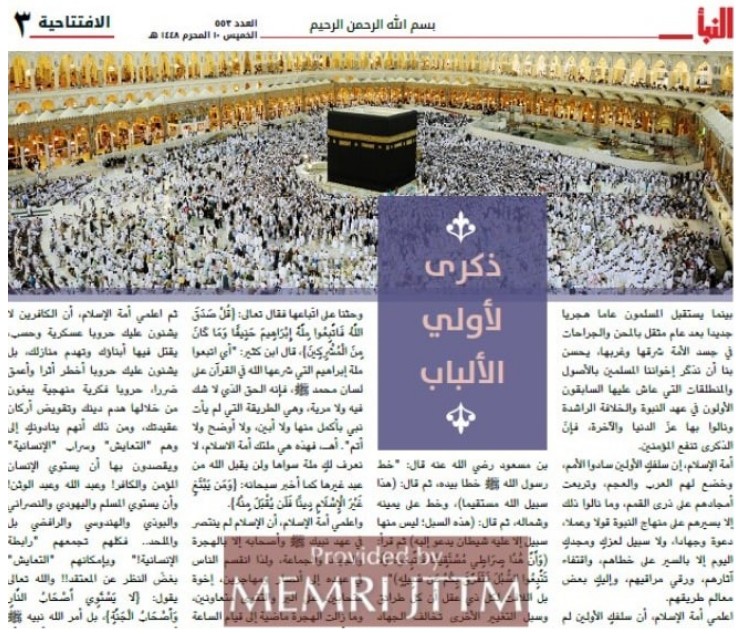
On June 25, 2026, the Islamic State (ISIS) released its weekly newsletter, Al-Naba’, issue 553, which featured an editorial titled “A Reminder To Those of Understanding.” It describes the importance of unity and steadfastness and reminds Muslims to adhere to their faith, emulate pious predecessors, and embrace jihad as sole means to address injustices.
The message opens by saying: “As Muslims welcome a new Hijri year—following a year heavy with trials and wounds afflicting the body of the Ummah across the East and West—it is fitting to remind our fellow Muslims of the fundamental principles and foundations by which the early generations lived during the eras of Prophethood and the Rightly Guided Caliphate, and through which they attained honor in both this world and the Hereafter; for indeed, the reminder benefits the believers.”
“Steadfastness In Faith”
The editorial highlights that today’s greatest challenges facing Muslims are often intellectual rather than physical. Competing ideas, cultural influences, and subtle messaging can shape beliefs over time. It urges Muslims to stay alert, think critically, and remain firmly grounded in their faith, while emulating the prophets in their unwavering belief and willingness to stand by principles even under pressure.
It states: “Your Prophet (Muhammad) and his Companions did not resort to [upholding] man-made constitutions or international courts of disbelief, nor did they prioritize anything over the Law of Allah the Almighty. Just as they believed in Allah as Lord, Creator, and Sustainer, they believed in Him as a Just Arbiter.”
“Jihad Is The Only Path To End Injustices”
Calling for rejecting of man-made laws and international community values, the editorial states that early Muslims never followed but one path in their efforts to end injustices and institute changes— the path of jihad. Thought the world may label jihad as “extremism,” it says mockingly, other paths for bringing about social changes have “yielded nothing but humiliation, disgrace, weakness, and division.”
Not only are other means ineffectual, the editorial continues, but they are actively at war with the only legitimate path of jihad. All advocates of pacifist activism, proponents of democracy, and devotees of nationalism fight against the mujahideen and harbor hostility toward them, it claims.
“Which, then, is more worthy of being followed and emulated: the path of your Lord and your Prophet, or the paths of misguidance and misery?” It asks scornfully.
According to the editorial, a clear and consistent creed is described as the foundation of strength and unity, noting that when core beliefs become unclear or altered and principles distorted, confusion and division follow.
Migration, Jihad, And Unity “To Restore Old Glory”
The piece goes on to encourage migration to the arenas of jihad, citing religious texts on the duty to maintain the tradition of Hijrah alive until the end of times, it says.
In addition, it highlights the importance of unity and focus on shared core values and teachings, rather than allowing secondary disagreements to create discord among Muslims, warning that division is often caused by narrow thinking and overemphasis on differences.