
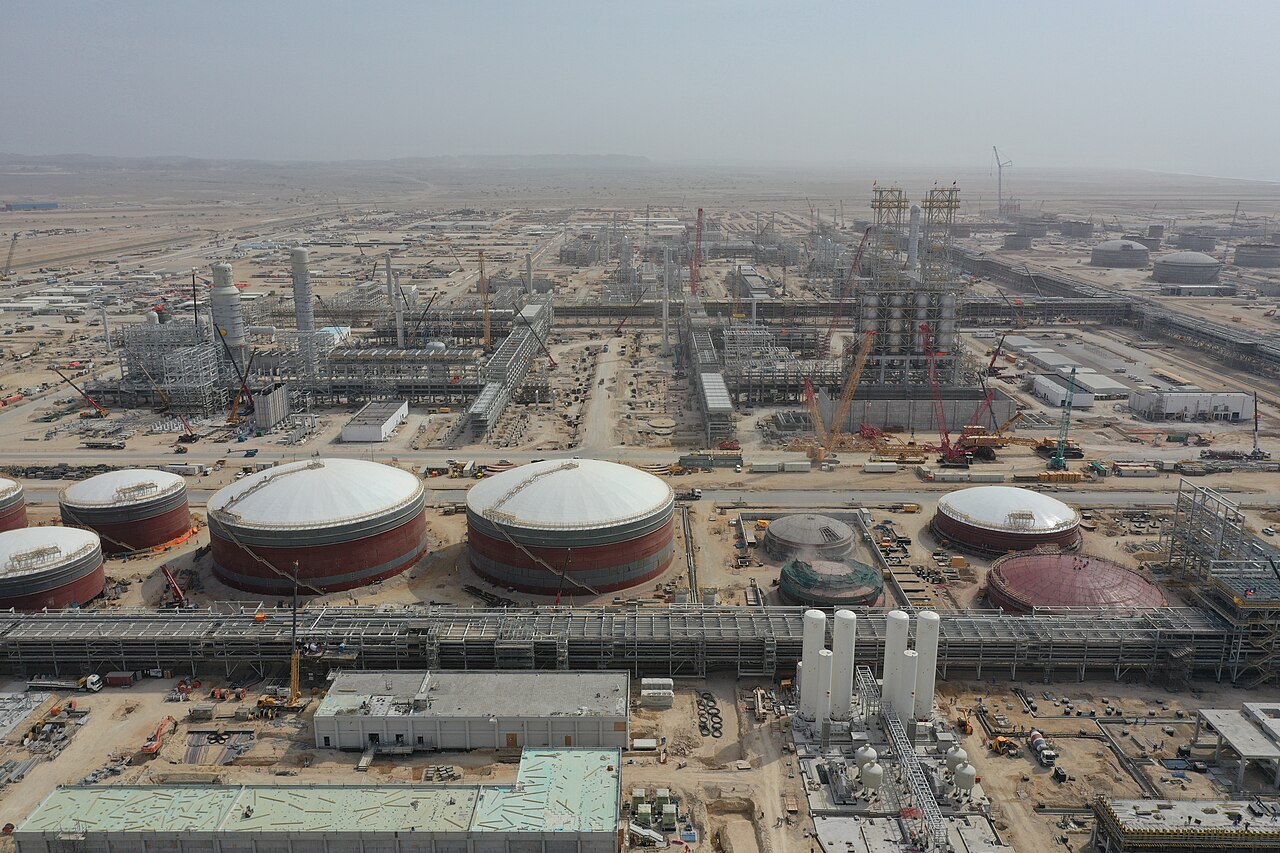
This article examines, through a case study, a strategic risk to the U.S. military posture at Duqm, Oman: the integrity of the digital systems that coordinate port and rail logistics flows on which operational continuity depends.
Duqm is a deep-water port on Oman’s southeastern coast, roughly 500 km south of the Strait of Hormuz. Since 2019, an agreement has granted the U.S. Navy access to Duqm for refueling and maintenance operations, reducing reliance on transiting the Strait.
Since the conflict involving the United States, Israel, and Iran began in late February 2026, Duqm has been struck at least three times: on March 1 and 3 by drone attacks carried out by Iran’s Islamic Revolutionary Guard Corps (IRGC) against fuel depots, and on July 12 by a reported strike on logistics support centers and refueling platforms used by U.S. aircraft carriers. The IRGC claimed responsibility and described the facilities hit; these claims have not been independently confirmed. Such a shift from generic civilian infrastructure to naval support facilities is consistent with greater target selectivity, though two data points are not sufficient to confirm a deliberate change in doctrine. After each incident, essential functions were restored quickly, and no publicly available evidence suggests a lasting impact on operational continuity.
Because physical damage does not appear to have disrupted operations, Duqm’s resilience to kinetic attack is better documented than the integrity of the digital systems that keep it running. This asymmetry, between what is known about the port’s physical durability and what remains unknown about its digital reliability, is the focus of this analysis, which examines the dependencies and exposures that could compromise those systems and the operational implications for U.S. military logistics.
Primary SPOF — Logistics Data Integrity
Here, SPOF (Single Point of Failure) refers to a critical dependency whose compromise can significantly degrade system-wide functioning, not necessarily a single isolated physical component.
Several critical logistics functions supporting the U.S. military presence in the Gulf depend on data generated and managed within civilian infrastructure such as Duqm. These data are produced in foreign territory by private operators who are not necessarily subject to the same security and oversight requirements applied to facilities directly managed or supervised by the Department of Defense (DoD). The United States maintains regulatory and technical frameworks for supply-chain security, including the Cybersecurity Maturity Model Certification (CMMC), the Defense Federal Acquisition Regulation Supplement (DFARS), and National Institute of Standards and Technology (NIST) guidelines; these tools, however, are more difficult to apply and verify when such assets are run by external actors, abroad, and outside DoD’s direct control. At a commercial port like Duqm, where staff follow security and oversight procedures different from those used in U.S. military facilities, the ability to enforce and verify such requirements is structurally weaker.
Port and rail operations—crane allocation, track assignment, synchronization with vessel departures—rely on inputs generated by civilian terminals and operators, typically coordinated through a Terminal Operating System (TOS), which manages scheduling and equipment allocation, linked to a Port Community System (PCS): an integration platform connecting shipping lines, customs authorities, and freight forwarders, often incorporating external feeds such as Automatic Identification System (AIS) vessel-tracking data. Because the two exchange data automatically rather than independently verify each input, a manipulated entry in either can propagate through the other. This combination of limited oversight and dependence on civilian inputs creates conditions that can become a point of compromise: as the following scenario illustrates, such an entry could alter a critical decision sequence without necessarily triggering an immediate alert.
Illustrative Scenario — How Manipulated Logistics Data Can Propagate Through the System
Imagine a hypothetical scenario.
A container manifest arriving at Duqm is altered to downgrade the priority of a shipment of spare parts destined for the Fifth Fleet. The data appear formally valid: standard port-management software does not automatically flag an alteration of this kind.
Track allocation, relying on that manifest, would automatically assign the container to a secondary position. Crane scheduling, using the same input, would delay unloading. Vessel scheduling, detecting no obvious error, would synchronize departure with an incomplete load.
The critical point is the silent propagation of the error: each process treats as valid an input originating from a civilian terminal lacking alert mechanisms for this type of alteration. As a result, the entire decision chain aligns around falsified data, producing an impact that remains invisible until its effects appear downstream.
Cascading Consequences for U.S. Military Logistics
In this scenario, manipulated data could degrade the ability of U.S. Central Command (CENTCOM) to maintain awareness of logistics flows (cargo, availability, and movement priorities), disrupt coordination between civilian and military flows, and delay essential logistics activities supporting naval operations through Duqm, without requiring any physical attack.
Incidents in the commercial sector have already shown that a compromise at an early point in the digital chain has caused operational disruptions lasting days and economic losses in the hundreds of millions of dollars. Duqm, unlike a global commercial network with multiple alternative nodes, has more limited redundancy for replacing affected systems or rerouting logistics functions; a disruption of comparable or greater duration is plausible.
Real-World Precedents Demonstrating Plausibility
Two real cases, though different from each other, indicate that the effects described in this scenario are not abstract:
- NotPetya (Maersk, 2017): A destructive cyberattack compromised Maersk’s information networks, disrupting activity at 76 ports and causing losses estimated in the hundreds of millions of dollars. The case does not involve data manipulation per se, but it demonstrates the scale of operational and economic damage that a digital attack of this kind can produce in a port logistics environment.
- GPS and AIS Spoofing in the Strait of Hormuz (2025–2026): Since the escalation of the U.S.-Israel-Iran conflict, thousands of vessels transiting the Strait of Hormuz have experienced GPS interference that also corrupts their Automatic Identification System (AIS) broadcasts, in some cases showing ships far from their true position without any physical breach of infrastructure. This is the mechanism most directly analogous to the scenario described here: maritime tracking tools accepting and acting on falsified data that appear valid to the equipment receiving it.
These precedents are not equivalent to the Duqm case, and neither reproduces the exact mechanism hypothesized. Taken together, however, they indicate that both the scale of potential damage (NotPetya) and the mechanism of data alteration without physical compromise (GPS/AIS spoofing) already have documented real-world examples.
Why This Risk Remains Underaddressed
Duqm is a hybrid infrastructure: civilian, commercial, multinational. Security standards designed for domestic critical assets are more difficult to extend with the same effectiveness to such a context. By comparison, sectors like energy, regulated under the North American Electric Reliability Corporation Critical Infrastructure Protection (NERC CIP), or civil aviation, under the Transportation Security Administration (TSA), have stringent regulatory frameworks directly applicable to operators under their jurisdiction. Such a terminal, operated by third parties, falls instead into a more fragmented area of responsibility and control.
A further factor is relevant: no publicly documented precedent of compromising the integrity of logistics data in direct support of military operations was identified in the reporting reviewed for this piece. The threat is technically plausible and supported by analogous precedents in other sectors, but it is not yet codified as a recognized operational risk.
Events in 2026 have tested Duqm’s physical resilience without yet testing the resilience of its digital systems. A compromise of logistics data integrity could affect Duqm’s operational functions without producing the visible, easily attributable signals that typically trigger traditional deterrence responses. This asymmetry, not the vulnerability of the port itself, may represent a more consequential exposure, and one that remains largely unaddressed.
Secondary SPOF — Combined Cyber-Physical Attack
Duqm integrates port and rail infrastructure with digital systems for managing and optimizing logistics flows within the same operational ecosystem. This physical-digital convergence introduces an additional layer of exposure: a cyber-physical attack could amplify the effects of the data-integrity compromise outlined in the previous section.
A combined strike, pairing a kinetic attack on support facilities with damage to critical digital assets, would require coordination of a vector already observed in the region with a distinct and more complex digital vector. Neither element, taken alone, requires new technological capabilities for a state or state-sponsored actor: the region has already seen drone-based kinetic attacks, while cyber campaigns against operational technology and information technology (OT/IT) networks are widely documented elsewhere.
The result could be simultaneous degradation of cargo movement and data reliability: a logistics node unable to process information efficiently or move goods on schedule. In this scenario, U.S. naval operations transiting through Duqm might face disrupted refueling timelines during a high-intensity regional crisis.
Tertiary SPOF — Oman’s Political Uncertainty
Oman has long maintained a balanced position among rival regional actors, serving as a discreet mediator in crises involving the United States, Iran, and Gulf monarchies. The IRGC attacks on Duqm in March and July 2026 (the July strike unverified) indicate that Oman’s traditional balancing posture did not prevent hostile actions against infrastructure on its territory. This does not imply political alignment, but it introduces uncertainty: in the event of further escalation, Muscat could reconsider conditions for military access to civilian facilities or impose tighter constraints on logistics data sharing.
In a context where military supply chains depend on data generated by private operators, even a limited shift in Oman’s political posture adds to the informational exposure created by that same dependence.
Two additional elements complicate the same informational ecosystem: the presence of external economic actors in the Special Economic Zone (SEZ), and the growing operational presence of a foreign navy in the same logistics node.
Chinese and South Korean Presence in the Duqm SEZ
Chinese firms have anchored the Sino-Oman Industrial Park in the SEZ since 2016, while South Korean companies have more recently signed manufacturing and power-generation projects there. This economic footprint does not imply direct operational access to port terminals or digital systems. It remains, however, a relevant structural condition: subcontracted infrastructure, civilian IT interfaces, and external technology supply chains can increase the complexity of managing informational flows. Unlike Oman’s political posture, the relevant element here is not the intent of a host state, but the complexity of technical and industrial interdependencies that shape how the port is governed.
In an environment where U.S. military logistics depend on privately generated data, even non-operational presence adds another layer of complexity to an already dependent system. Its primary effect is increased informational complexity rather than the creation of an identifiable attack vector.
Indian Operational Presence
Between late 2025 and early 2026, India increased its naval presence at Duqm as part of a strategy to diversify maritime access and reduce reliance on more exposed Gulf nodes. This introduces another actor with access to the port’s civilian infrastructure.
Its primary effect is a further increase in the number of data flows present in the logistics ecosystem, not a direct risk to the United States. In a logistics node where data integrity is a critical component of resilience, each additional actor increases system complexity.
Strategic Paradox — Kinetic Deterrence Does Not Cover Digital Compromise
Physical attacks on port infrastructure tend to be observable, attributable, and manageable through traditional deterrence tools. Attacks aimed at compromising logistics data integrity operate in a domain where attribution is slower, more contestable, and often inconclusive. An adversary manipulating logistics data may not produce an immediately visible event, leave observable traces, or trigger a timely alert.
This can create a decision-making asymmetry: political and military response may be harder to calibrate without sufficient elements for confident attribution, while operational degradation occurs regardless. That asymmetry is the crux of the paradox: deterrence depends on the ability to observe and attribute an act. The threat to data integrity, unlike the kinetic threat, can produce these effects without immediately activating traditional attribution and response mechanisms. It can therefore affect the capacity of logistics functions supporting the U.S. Navy without any intrusion into the port itself.
Operational Recommendations
The primary risk factor identified in this article concerns the integrity of logistics data generated by civilian infrastructure in foreign territory. Measures below therefore focus on this point, using targeted interventions that do not require rebuilding the port itself but can significantly reduce this exposure. Its political and multi-actor dimensions, discussed above, call for a complementary but distinct set of responses, addressed in recommendation 7 below.
- Continuous Monitoring of Data Integrity
Implement automated consistency checks on manifests, load priorities, and routing flows. The objective is to detect anomalous variations in civilian inputs before they affect decision-making and logistics planning processes. This is the measure most directly linked to the core risk identified in this analysis: the integrity of the data itself.
- Joint U.S.–Oman Audits of Systems That Generate Logistics Data
Customs, rail, and container-handling terminals are the entry points for data. Periodic joint audits reduce the risk of undetected manipulation and improve operational transparency without interfering with civilian port management.
- Contractual Security Requirements for Civilian Operators
Include clauses in port operator contracts requiring minimum cybersecurity procedures, personnel training, and access controls. This does not replace military standards, but establishes a protection level consistent with the nature of the infrastructure.
- Duplication and Independent Verification of Critical Military Data Flows
Data related to U.S. Navy refueling and operational activities should also be stored in parallel systems under U.S. control, accessible when needed. This measure applies exclusively to military information flows and does not imply control over Oman’s civilian networks, maintaining consistency with the collaborative approach of joint audits. Redundancy enables cross-checks in case of anomalies.
- Logical Separation and Access Control Between Civilian and Military Networks
Separate port management systems from those used for military logistics planning. Segmentation reduces the likelihood that an attack or error in civilian networks propagates into military ones.
- Continuity Procedures for Rail and Customs Routing
If data integrity is compromised, the ability to temporarily activate alternative operational modes allows maintenance of a minimum level of continuity. This is an immediate resilience measure, not a structural solution.
- Diplomatic Engagement on Data Governance in Multilateral Contexts
The political and multi-actor dimensions of this risk—Oman’s evolving security posture, the presence of Chinese and South Korean infrastructure interests, and the growing operational footprint of the Indian Navy—fall outside the scope of technical mitigation alone. Sustained diplomatic engagement with Muscat, and information-sharing understandings with allied and partner navies operating at Duqm, would help ensure that data governance keeps pace with the port’s increasingly multinational character.
- Physical Redundancy Against Combined Attacks
Distribute fuel storage and refueling capacity across multiple locations within Duqm, rather than concentrating it in a single facility, and identify backup refueling arrangements at nearby nodes, such as Fujairah or Salalah, that could be activated on short notice. This would reduce the likelihood that a combined kinetic-cyber strike could simultaneously degrade physical throughput and the systems that manage it.
- Attribution and Deterrence-Policy Adaptation
Establish pre-negotiated attribution protocols with U.S. Cyber Command for incidents affecting logistics infrastructure supporting U.S. operations abroad, and develop a declaratory policy clarifying how a confirmed compromise of allied logistics data would be treated for deterrence purposes. Without such a framework, an adversary retains an incentive to operate in the ambiguity the Strategic Paradox describes.
Conclusion
Duqm’s strategic role in U.S. Gulf operations will persist regardless of how the current conflict is resolved. Whether its digital systems are tested before these safeguards are in place remains an open question, and one that will not disappear once the fighting stops.