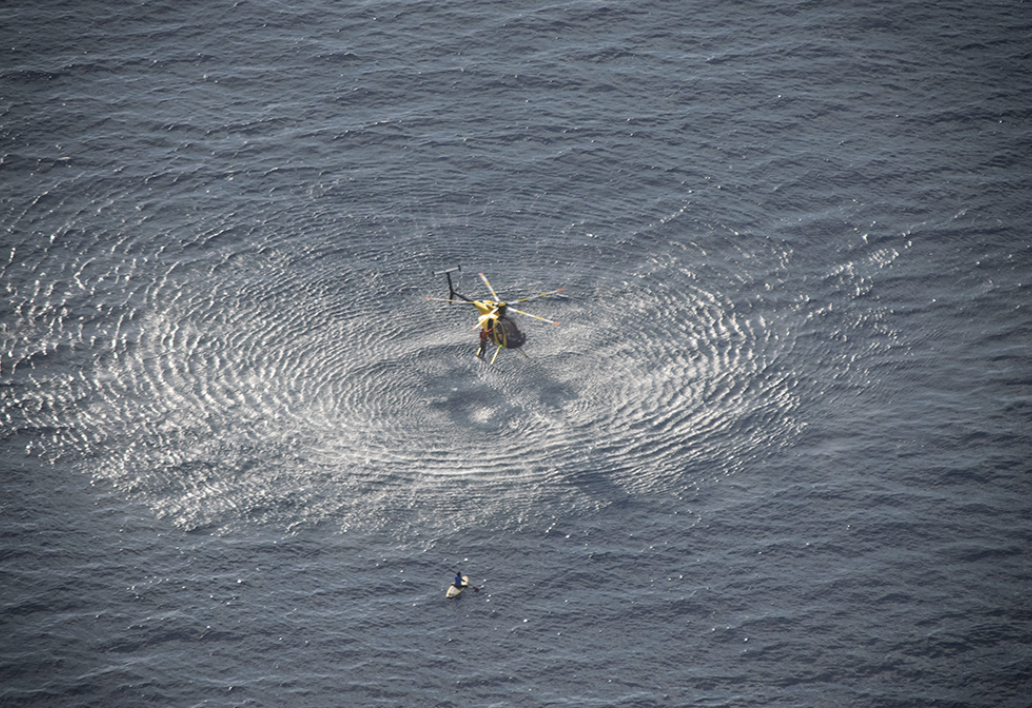
Paddlecraft fatalities are not complex casualties. They are preventable, and the Coast Guard Auxiliary’s AUXPAD program may be the most underutilized tool for addressing them.
On any given weekend morning across the United States, thousands of kayakers, canoeists, and stand-up paddleboarders push off from shorelines, boat ramps, and riverbanks, many without life jackets, without knowledge of navigation rules, and without any meaningful connection to the maritime safety culture that has long governed recreational boating. They do not think of themselves as boaters. In many ways, that is precisely the problem.
The U.S. Coast Guard Auxiliary’s Paddlecraft Program, known as AUXPAD, was built to address that gap. Since its establishment, AUXPAD has placed trained volunteer operators directly on waterways, at launch points, and within paddling communities to provide safety education, conduct informal vessel safety checks, and model responsible behavior through visible engagement. It is targeted, practical, and culturally relevant outreach.
It is also, by most honest assessments, significantly underutilized.
This article argues that AUXPAD, properly integrated into modern outreach platforms, cross-sector partnerships, and the Auxiliary’s broader mission architecture, can function as a scalable force multiplier for recreational boating safety. The program’s operators are already positioned where they need to be. The question is whether the institution is prepared to fully leverage what they represent.
The Data Behind the Problem
Paddlesports have experienced remarkable growth over the past decade. Kayaking, canoeing, and stand-up paddleboarding have attracted millions of new participants, drawn by their accessibility, low cost, and broad appeal as outdoor recreation. The result has been a meaningful expansion of the boating public but not a corresponding expansion of boating safety culture.
The consequences show up in the statistics. The U.S. Coast Guard’s annual recreational boating safety reports consistently show that paddlecraft account for a disproportionate share of boating fatalities, with most of those deaths involving the absence of a personal flotation device (U.S. Coast Guard, 2023). These are not freak accidents or mechanically complex events. They are preventable outcomes driven by a single correctable behavior: the failure to wear a life jacket.
What makes this particularly challenging from a public safety standpoint is the cultural dimension. Many paddlers actively resist the identity of “boater.” They do not follow maritime news, do not participate in boating safety programs, and are largely outside the reach of traditional Coast Guard outreach channels. Reaching them requires a different kind of engagement, one that meets them on their own terms, in their own spaces.
That is exactly what AUXPAD was designed to do.
What Auxpad Operators Actually Do
Certified AUXPAD operators bring a combination of skills and positioning that distinguishes them within the Auxiliary. They are qualified in paddlecraft operations and safety, trained in public interaction and education, and able to operate in shallow, congested, or otherwise difficult-to-access environments where traditional Coast Guard assets cannot easily venture (U.S. Coast Guard Auxiliary, n.d.-b). This makes them something genuinely rare: a mobile, community-embedded, on-water safety presence capable of engaging the public at the exact moment safety decisions are being made.
A paddler pushing off from a launch ramp without a life jacket is making a choice in real time. An AUXPAD operator standing at that ramp, offering a friendly safety check and a brief conversation, has an opportunity that no brochure, billboard, or social media post can replicate. Behavioral change is most effective at the point of action. AUXPAD operators are positioned precisely there.
Yet despite this positioning, AUXPAD currently operates largely within programmatic silos. Operators perform valuable work promoting life jacket use, engaging paddling communities, supporting safety events, but those efforts are often isolated within individual flotillas, underreported at the district and national level, and disconnected from other Auxiliary capabilities, including Public Affairs, Vessel Examinations, and youth engagement programs. The result is a structural paradox: a program highly relevant to one of the Coast Guard’s most persistent safety challenges, operating well below its potential strategic impact.
Repositioning Auxpad as a Force Multiplier
Closing that gap requires a deliberate shift in how AUXPAD is conceptualized and employed. Three changes would materially increase the program’s impact.
First, AUXPAD should move from transactional outreach to sustained engagement. Handing a paddler a pamphlet is a transaction. Building a relationship with a local paddling club, establishing a recurring presence at a popular launch site, or co-hosting a safety event with a nonprofit outfitter are engagement strategies. They create continuity, build trust, and increase the probability of behavioral change over time.
Second, AUXPAD activities should be systematically integrated with Public Affairs capabilities. The program’s visibility beyond the local level is currently minimal, which limits both institutional recognition and the replication of successful practices. When AUXPAD operators document their missions, contribute to national safety campaigns, and share impact stories through official channels and digital platforms, they are practicing strategic communication demonstrating the Auxiliary’s value to partners, policymakers, and potential recruits (U.S. Coast Guard Auxiliary, n.d.-a).
Third, AUXPAD should be formally integrated with other Auxiliary mission areas. Vessel Examinations, Sea Scouts, and Surface Operations each touch the paddling community in different ways. Coordinating across those programs amplifies effectiveness and eliminates redundancy. An AUXPAD operator who can connect a new paddler with a vessel examiner or a local Sea Scout ship is not merely conducting outreach; they are building a pipeline.
A Solution to the Volunteer Retention Challenge
The Auxiliary faces a challenge that is not unique to maritime organizations: attracting and retaining volunteers in a landscape where expectations around engagement have fundamentally shifted. Research from the Corporation for National and Community Service documents a broad movement toward flexible, mission-driven participation with visible, tangible outcomes (AmeriCorps, 2022). Volunteers increasingly want to see the impact of their work, and they want that work to fit into lives that are already full.
AUXPAD aligns naturally with those expectations. Paddlesports attract younger demographics, environmentally conscious individuals, and recreational users seeking community alongside activity. These are precisely the populations the Auxiliary must engage to remain viable over the next generation. By positioning AUXPAD as an accessible entry point with a clear pathway to broader Auxiliary involvement, the program can function as a recruitment engine alongside its public safety mission. Retention improves when members feel their contributions are meaningful and recognized, and an AUXPAD operator whose work is featured in a district report or national campaign is more likely to stay engaged than one whose efforts disappear into an activity log.
The Strategic Imperative
The Coast Guard operates in a resource-constrained environment with expanding mission demands. The Auxiliary exists, in part, to extend the Service’s reach into communities that active-duty assets cannot cost-effectively serve (U.S. Coast Guard Auxiliary, n.d.-a). That mission is only meaningful if the Auxiliary is genuinely leveraging its capabilities.
AUXPAD meets every standard criterion for a force multiplier. It is scalable, cost-effective, adaptive, and capable of producing measurable public safety outcomes. When integrated into broader initiatives, it amplifies recreational boating safety campaigns, strengthens community outreach, and supports recruitment simultaneously. Failing to fully develop that potential is not a missed opportunity in the passive sense; it is a strategic oversight at a moment when preventable paddlecraft fatalities remain an unresolved public safety problem, and volunteer organizations are competing for relevance in a changing civic environment.
The paddler on the water today is a point of engagement, a potential recruit, and a life that can be protected through timely intervention. AUXPAD operators are already there, bridging the gap between policy and practice. The institution’s task is to meet them there with integration, visibility, and support that the mission demands.
Disclaimer: The views expressed in this article are solely those of the author and do not represent the official views of the United States Coast Guard, the United States Coast Guard Auxiliary, the Department of Homeland Security, or any government agency.
References
- AmeriCorps. (2022). Volunteering and civic life in America. Corporation for National and Community Service. https://data.americorps.gov/stories/s/AmeriCorps-Civic-Engagement-and-Volunteering-CEV-D/62w6-z7xa
- U.S. Coast Guard. (2023). 2023 recreational boating statistics. U.S. Department of Homeland Security. https://www.news.uscg.mil/Press-Releases/Article/3788966/coast-guard-releases-2023-recreational-boating-statistics/
- U.S. Coast Guard Auxiliary. (n.d.-a). About the Auxiliary. https://cgaux.org/about.php
- U.S. Coast Guard Auxiliary. (n.d.-b). Auxiliary paddlecraft program (AUXPAD) handbook (COMDTINST 16794.11A). U.S. Coast Guard. https://americancanoe.org/wp-content/uploads/2023/12/USCG-Auxiliary-Paddlecraft-Safety-Program-Handbook16794.11A.pdf