

On January 7, 2026, the Federal Communications Commission (FCC) released updates to its December 22 Covered List directive that add important clarifications and temporary exemptions for the unmanned aircraft system (UAS) industry. While the December 22 action blocked new foreign-produced UAS and critical components from entering the U.S. market, the January 7 updates carve out temporary pathways for compliant equipment.
Following his initial review of the expanded Covered List, Mark Bathrick, former Director of the U.S. Department of the Interior’s Office of Aviation Services, and now President of Bathrick Aviation Consulting, has once again published a thorough assessment of the FCC’s latest updates. Key takeaways include that the FCC now exempts two categories of UAS and UAS critical components from Covered List restrictions:
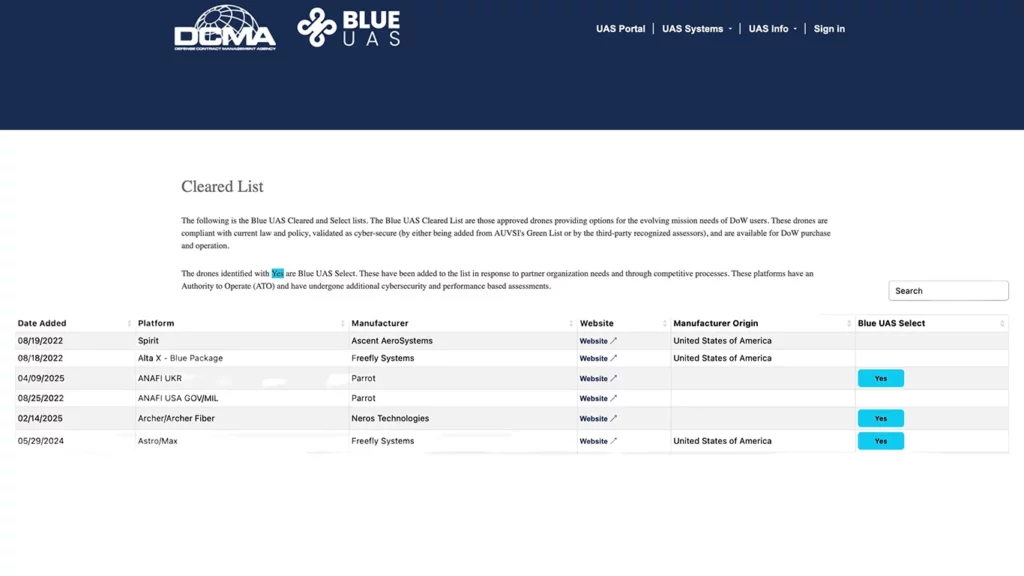
Blue UAS Cleared List platforms — UAS and components appearing on Defense Contract Management Agency’s (DCMA’s) Blue UAS Cleared List or the associated Framework list of compliant components and software.
Buy American “domestic end products” — UAS and components that qualify under the Buy American Standard (48 CFR 25.101(a)), which generally requires U.S. manufacturing and domestic component costs exceeding 65% (for 2024–2028).
Important Clarifications
Bathrick’s analysis of the January 7 update address several points of confusion from the December 22 announcement:
- The restriction is forward-looking, meaning existing authorized models remain importable, sellable, and usable.
- No device now requires FCC authorization that didn’t already require it, addressing concerns about batteries and motors.
- “UAS critical components” means components designed and intended primarily for UAS, not generic products that could be used on a drone.
- The key trigger is the physical location of production, not corporate nationality unless the equipment qualifies for the Blue UAS or Buy American exemptions, which have their own specific criteria.
Conditional Approval Pathway
For companies that don’t qualify for the Blue UAS or Buy American exemptions, the FCC established a Conditional Approval process requiring detailed supply chain disclosure, corporate transparency, and, critically, a time-bound U.S. onshoring plan. Approvals are limited to 12 months and can be revoked for misrepresentation.
“If your organization has been navigating the transition away from Covered Foreign Entities, these changes offer real opportunities to recover and leverage your investment for strategic growth and resilience,” said Bathrick.
What’s Next
To read Bathrick’s comprehensive analysis of the January 7 updates – including what changes due to the Public Notice, Fact Sheet, and Conditional Approval guidance; practical implications for market impact timelines; a strategic recovery framework for companies that invested in allied-nation sourcing; and an example Conditional Approval submission outline – see his full review at Bathrick Aviation Consulting.
The temporary exemptions create a limited-time bridge, making 2026 a critical year for organizations to pursue Blue UAS listing, re-architect manufacturing to meet Buy American standards, or apply for Conditional Approval with credible onshoring commitments.