
Parts I and II of this series established that maritime straits and land corridors concentrate global movement into passages where disruption produces disproportionate consequences. The three defining conditions of a chokepoint – narrowness, indispensability, absence of alternatives – apply as readily to the Strait of Hormuz as to the Suwałki Gap. Part III argues that a third geography now satisfies the same conditions: the cables, routing nodes and data centre clusters on which modern economies and militaries have staked an extraordinary degree of dependence.
The Digital Chokepoints: Cables, Nodes, and the New Terrain
There is a second geography that runs beneath and alongside the physical one and it is increasingly vulnerable by exactly the same logic.
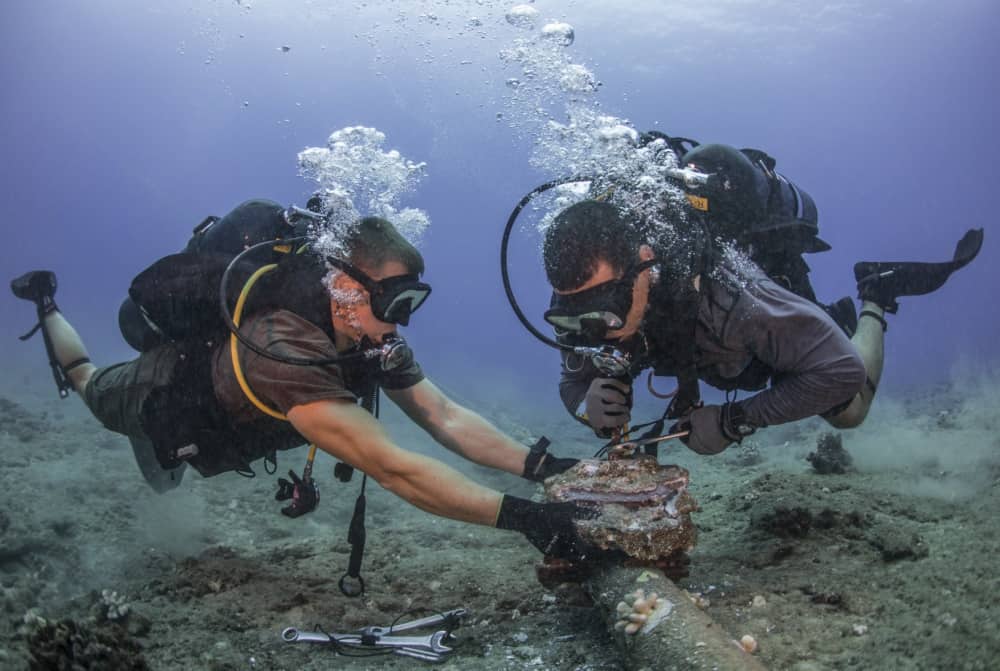
Roughly 400 active submarine cable systems carry over ninety-five percent of international internet traffic and critically, the entirety of international financial transactions. These cables do not follow arbitrary routes. They follow the same maritime corridors that shipping has used for centuries threading through the Red Sea, the Strait of Malacca, the English Channel, around the Cape. The consequence is that a single point of physical disruption now threatens two systems simultaneously: the shipping lane above the surface and the digital artery running beneath it. When Houthi forces threatened the Bab el-Mandeb in 2023–24, three major submarine cable systems in the Red Sea were simultaneously put at risk. The overlap is structural.
Cable landing stations are the shore-based facilities where submarine cables connect to national networks, are one chokepoint of this digital geography. A small number of locations handle a disproportionate share of global traffic: the southwestern coast of England, the eastern seaboard of the United States, the Iberian Peninsula, Singapore and a handful of others. Their physical security has not kept pace with their strategic importance. The 2022 severing of the Tonga cable isolated an entire Pacific nation. The 2023–24 incidents involving cables and power interconnectors in the Baltic, attributed by multiple governments to deliberate interference, demonstrated that this vulnerability which also extends to energy infrastructure running on the same seabed.
Internet Exchange Points amplify the concentration further. The facilities in Frankfurt, Amsterdam, London, Singapore and Hong Kong handle the bulk of global internet routing. Their disruption would not merely slow connectivity but would fragment the internet regionally in ways that affect financial markets, military communications and civilian infrastructure simultaneously. The interdependence is total and perhaps invisible to those who depend on it.
The AI Infrastructure Layer
Beyond cables and routing nodes lies a third layer: compute infrastructure. The training and operation of advanced AI systems are concentrated in a remarkably small number of hyperscale data centre clusters predominantly in Northern Virginia, with secondary concentrations in Ireland, Singapore and a few other locations. These facilities require prodigious amounts of power and water, are difficult to build and take years to expand.
They are, in effect, chokepoints for the most consequential technology of the coming decades. Whoever can access, deny or degrade them shapes who can develop and weaponise advanced AI. While TSMC’s fabrication plants are a physical chokepoint for the production of chips, the hyperscale data centres are the operational chokepoint for what those chips do once built. Control of or the ability to deny AI infrastructure is emerging as a distinct dimension of strategic competition, one that most security frameworks have not yet integrated.
The digital chokepoints differ from their physical counterparts in one important respect as redundancy exists and is growing but within limits. While traffic can be rerouted, cables repaired, and alternative data centres brought online. Rerouting adds latency that matters in financial trading and military command systems. Repair takes time – weeks for a cable, months for a data centre facility, and the coordinated targeting of multiple nodes simultaneously – a scenario no longer confined to planning documents – would stress redundancy in ways that have not been tested at scale.
The cables beneath the sea and the data centres on land satisfy the same three conditions as any physical chokepoint: narrowness of concentration, indispensability of function, and absence of alternatives at speed.
What States Are Doing — and What Remains Undone
The reassertion of chokepoint geography both physical and digital has driven responses. Naval presence has increased. The United States, NATO and regional partners have invested in patrols, freedom of navigation operations and escort missions across the Persian Gulf, the Red Sea, the South China Sea and the Baltic.
Supply chain diversification has accelerated. The Houthi campaign pushed a trend already evident by way of investment in alternative pipelines, overland transit corridors and port infrastructure that reduces dependence on any single passage. India’s development of the International North-South Transport Corridor, European efforts to diversify energy supply after 2022,and the broader reconfiguration of Indo-Pacific logistics all reflect the same judgement that single-point geographic dependencies are no longer acceptable risk.
On the digital front, NATO designated undersea infrastructure as a priority concern following the Baltic cable incidents. The United States has restricted Chinese investment in data centre facilities near sensitive military installations. Several European governments have launched reviews of cable landing station security. The strategic competition for digital chokepoints is in its opening phase and the decisions made now about redundancy, protection and governance will shape the vulnerabilities of the next decade.
Asymmetric denial capabilities have also proliferated. States that cannot match stronger adversaries in open-ocean competition are investing in mine warfare, anti-ship missiles, unmanned systems and submarine forces optimised for constrained environments. Ukraine demonstrated what is achievable with relatively modest means in the right geography and that lesson has been absorbed well beyond Kyiv.
Economic statecraft has been integrated more deliberately with geographic leverage. The ability to threaten or actually disrupt a chokepoint has become a recognised instrument of competitive strategy. The line between economic coercion and military signalling has blurred. Managing that ambiguity, has become a core competency of contemporary statecraft.
Conclusion: The Geometry Has Not Changed
From Thermopylae to Hormuz, from the GIUK Gap to the Siliguri Corridor, from the cable landing stations of Cornwall to the data centre clusters of Northern Virginia, chokepoints continue to define the geometry of power. They compress movement, magnify vulnerability and allow even limited actors to exert influence disproportionate to their overall capability.
A disruption that might once have inconvenienced a regional power now reverberates across continents in minutes, simultaneously across physical, economic and digital domains. What admirals and generals once managed alone is now equally the concern of finance ministers, logistics directors, data centre operators and chief executives. The strategic perimeter has expanded and most organisations have not expanded their thinking to match it.
The states and alliances that understand that invest in denial, in resilience and in the ability to operate in constrained environments both above and below the surface hold a structural advantage that no amount of open-ocean capability or processing power can fully offset. Those that mistake technological superiority for geographic immunity will, like the Persians at Thermopylae, discover the cost of that assumption.
Power still flows through narrow spaces. The spaces have multiplied. The principle has not changed.