

Introduction: A Misread Threat Landscape
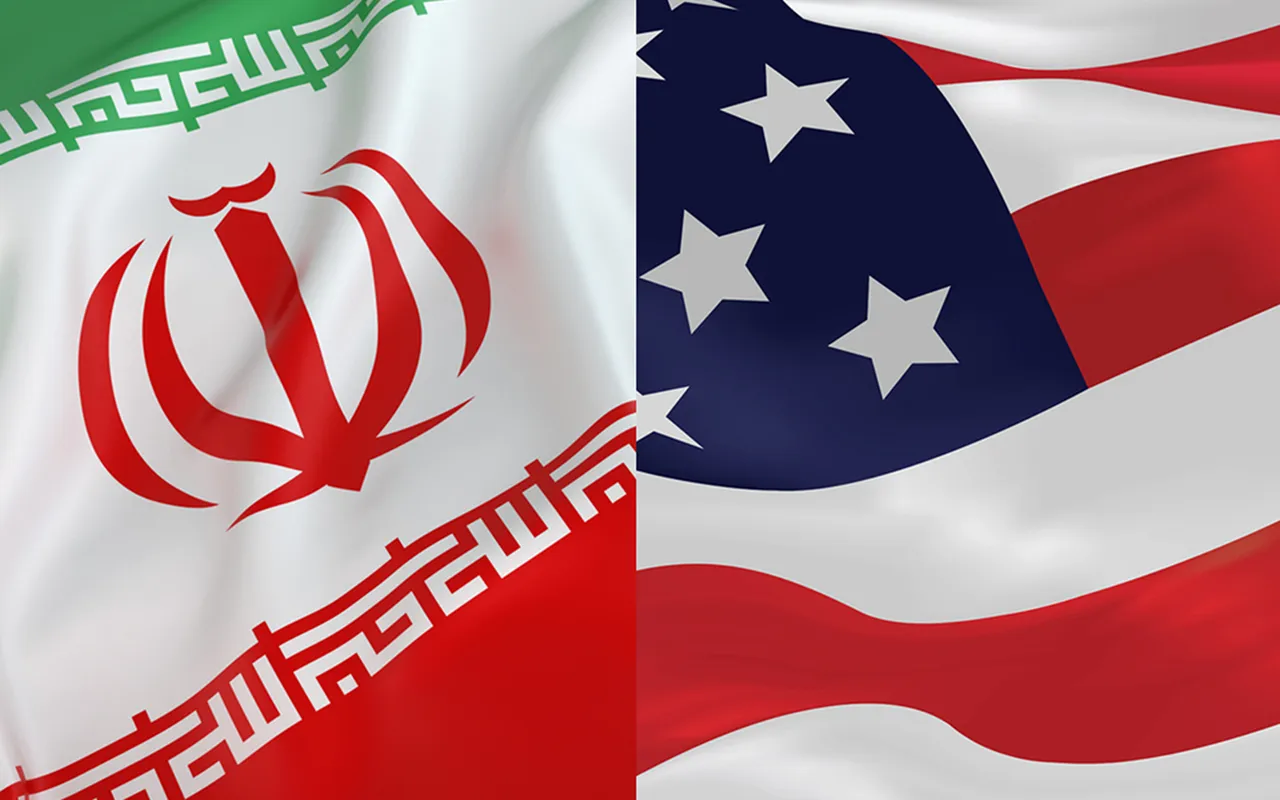
The U.S.-Israeli war with Iran, which began with coordinated strikes on February 28, 2026, has revived a familiar homeland-security question: what kind of retaliation is most likely to follow direct military confrontation with Tehran? Public discussion has focused heavily on sleeper cells, Hezbollah networks, and the possibility of a spectacular Iranian-directed attack on U.S. soil. Those concerns are understandable, but they fail to capture the full potential gamut of possibilities. The more credible threat picture is broader, more diffuse, and in some ways more dangerous precisely because it is less centralized.
A serious assessment must disaggregate the threat. Iran retains the capability to threaten U.S. interests both directly and indirectly, but Tehran’s historic preference has been deniable coercion: proxies, surrogates, criminal intermediaries and disposable agents (as we are now seeing in London), covert action, and cyber operations. At the same time, the conflict has energized other pathways, including lone-actor mobilization and opportunistic exploitation by transnational jihadist actors such as al-Qaeda and the Islamic State.
This article offers a disaggregated threat assessment against the backdrop of an existing analysis that has largely failed to address: the accumulating strategic failure of American counterterrorism policy over the past quarter-century. The war against Iran did not emerge from a vacuum; quite to the contrary. It is, in significant respects, the logical culmination of a pattern of decisions that ignored hard lessons from Afghanistan and Iraq, generated the very radicalization it sought to prevent, and now threatens to repeat the cycle on an even larger scale. That strategic context is inseparable from any honest and accurate threat assessment.
The war has also imposed severe economic costs that extend far beyond the battlefield. The Strait of Hormuz, through which approximately 20% of the world’s oil and liquefied natural gas (LNG) supply transits, has experienced severe disruption, with shipping traffic dropping dramatically during peak periods of escalation. Global oil prices surged sharply following the initial strikes, and the resulting increases in fuel, food, and transportation costs have been felt acutely by working populations across Europe, Asia, Africa, and the Americas. Radicalization research consistently identifies economic grievance as a powerful accelerant when layered atop ideological, social, and political anger. The economic fallout of this conflict is therefore not a secondary consideration in a terrorism threat assessment; it is a core variable that deserves serious attention.
The Analytical Problem: One Threat, Multiple Pathways
The central analytical error in public discourse is treating the Iran threat as a single category. It is not. The current danger consists of overlapping but distinct vectors: direct Iranian state action; proxy and surrogate operations; criminally mediated activity; lone-actor and small-cell violence; cyber and infrastructure disruption; and strategic exploitation by jihadist networks. A policy response that collapses these categories risks misallocating resources and failing to counter the highest-probability threats.
Each of these pathways carries a different probability profile, a different operational signature, and a different set of indicators. Conflating them produces not just analytical confusion but strategic misdirection, concentrating attention and resources on the most dramatic scenarios while the most probable ones develop with minimal disruption.
Strategic Context: A Pattern of Unlearned Lessons
The war’s scale matters. The February 28 operations involved large-scale coordinated strikes on Iranian military, leadership, and energy infrastructure, followed by continued escalation into April 2026. This is anything but a limited exchange. It is a sustained regional conflict with global implications, and it must be assessed in the context of the strategic record that produced it.
Since 2001, the United States has repeatedly demonstrated tactical success in counterterrorism while failing to convert that success into durable strategic outcomes. Afghanistan and Iraq both illustrate how military operations can degrade adversaries while simultaneously creating the instability and grievance-fueled environments that enable new and more dangerous threats to grow and metastasize. The 2003 decision to dissolve the Iraqi Army and implement a sweeping de-Baathification policy dismantled the institutions that had maintained basic order and incorporated hundreds of thousands of armed, trained, and suddenly unemployed men into the reservoir of potential recruits. U.S. policy in Iraq helped create the conditions from which an al-Qaeda in Iraq (which morphed into ISIS) insurgency emerged almost overnight. This is the documented conclusion of multiple post-conflict reviews and senior military officers who served in the theater.[i]
The parallels with the current conflict are direct and disturbing. The strikes on Iranian nuclear and military infrastructure, whatever their tactical rationale, have severely degraded Iran’s conventional deterrent capacity while leaving its intelligence apparatus, its ideological networks, and its global diaspora intact. Israeli military operations in Gaza preceding this conflict killed more than sixty-five thousand Palestinians by late 2024, including disproportionate numbers of women and children documented by the United Nations Office for the Coordination of Humanitarian Affairs. On February 28, 2026, during the opening hours of Operation Epic Fury, a U.S.-Israeli airstrike struck the Shajareh Tayyebeh girls’ primary school in Minab, Iran, killing at least 165 schoolgirls, 26 teachers, and four parents, the majority of the children between the ages of 7 and 12. A preliminary U.S. investigation subsequently found the school had been misidentified as a military target due to outdated intelligence data. UN human rights experts condemned the strike as a grave violation of international humanitarian law, and 120 members of Congress demanded a formal accounting from the Pentagon.[ii] These events are not incidental to the terrorism threat. They are among its most powerful drivers, and these images will live on in perpetuity online, radicalizing future generations.
It is essential to state clearly that this critique is not directed at Islam or at Muslim communities. The radicalization that military atrocities produce is a human phenomenon, not a religious one. The same dynamics that drove recruitment into Provisional Irish Republican Army cells after Bloody Sunday, or into Basque separatist networks after Franco’s repression, or that drove recruitment into Chechen militancy after Putin flattened Grozny, operate in populations that witness the killing of civilians by a foreign military power without accountability. Revenge is a powerful motivator. When that power is the United States, and when the victims are from communities with which large numbers of people identify across the world, the mobilizing effect is amplified regardless of the specific religious composition of those communities.
Al-Qaeda has understood this dynamic for three decades. The grievance architecture that Osama bin Laden articulated in his 1996 and 1998 declarations of war against the United States, centering on American military presence in Muslim-majority countries, the perceived license granted to Israel for the killing of Palestinians, and the suffering of civilian populations under American-supported governments, is essentially the same architecture that current events are now refreshing and amplifying. The war against Iran is not a departure from the conditions that produced al-Qaeda’s attacks on September 11, 2001. It is a continuation of them, intensified.
Military action can disrupt capabilities and kill leaders. It cannot address the conditions that enable radicalization. When conducted in ways that produce significant amounts of civilian casualties, it actively exacerbates those conditions. The history of American counterterrorism since 2001 is, among other things, a history of this paradox: operations that succeeded tactically while failing strategically, because each tactical success generated the grievances that filled the next generation of recruitment pipelines.
Iran’s Doctrine: Deniability and Escalation Control
Any realistic appraisal of Iranian-directed terrorism against the United States homeland must begin with a foundational observation: Iran has generally preferred proxy and deniable methods, though it has also conducted direct operations. The Islamic Republic’s forty-year record demonstrates a consistent preference for plausible deniability over direct attribution. By establishing and sustaining a network of non-state actors, including Hezbollah in Lebanon, the Houthis in Yemen, and the Popular Mobilization Forces in Iraq, and by intervening militarily to sustain Bashar al-Assad’s regime in Syria, where the conflict killed an estimated 580,000 people and Iranian-backed militias bore direct responsibility for the majority of civilian deaths, Tehran has projected power and inflicted enormous human costs without ever formally crossing the threshold of direct military confrontation with Washington.[iii]
This proxy architecture, constructed by former IRGC-Quds Force commander Qassem Soleimani, was not built solely for ideological reasons. It was designed to afford Iran the strategic benefits of asymmetric coercion while insulating the regime from the costs of direct retaliation. As Clarke and Costa observed, Iran is unlikely to want its fingerprints on any traceable attack planning because direct attribution would remove the regime’s most durable shield: deniability.[iv] The Combating Terrorism Center at West Point reinforced this assessment, noting that Iran’s operational methodology has historically relied on criminal proxy and surrogate networks to establish layers of plausible deniability.[v]
Over the past five years, U.S. authorities have disrupted at least seventeen Iranian-linked plots inside the United States, involving Iranian operatives, criminal surrogates, and terrorist proxies. A Hezbollah operative convicted in New York described himself as a sleeper agent conducting preoperational surveillance in the United States and Canada, to be activated specifically in the event of a U.S.-Iran war.[vi] These facts establish real capability. However, capability and doctrine are distinct considerations. Directly attributable attacks would represent a fundamental departure from the doctrine that has served the Islamic Republic’s survival interests for four decades, and a confirmed attribution would eliminate the regime’s ability to calibrate escalation on its own terms. It would also likely trigger a full-throated U.S. response.
Stay tuned for Part 2: The Threat Vectors in Detail
References
[i] Gordon, M. R., & Trainor, B. E. (2012). The endgame: The inside story of the struggle for Iraq, from George W. Bush to Barack Obama. Pantheon Books. & Special Inspector General for Iraq Reconstruction. (2013). Learning from Iraq: A final report from the Special Inspector General for Iraq Reconstruction. U.S. Government Printing Office.
[ii] Amnesty International. (2026, March 18). USA/Iran: Those responsible for deadly and unlawful U.S. strike on school that killed over 100 children must be held accountable. https://www.amnesty.org/en/latest/news/2026/03/usa-iran-those-responsible-for-deadly-and-unlawful-us-strike-on-school-that-killed-over-100-children-must-be-held-accountable/ & Human Rights Watch. (2026, March 7). US/Israel: Investigate Iran school attack as a war crime. https://www.hrw.org/news/2026/03/07/us/israel-investigate-iran-school-attack-as-a-war-crime
[iii] Syrian Network for Human Rights. (2024). Annual report on civilian casualties in Syria. https://snhr.org/ & United Nations Commission of Inquiry on the Syrian Arab Republic. (2021). Report of the Independent International Commission of Inquiry on the Syrian Arab Republic. United Nations Human Rights Council.
[iv] Clarke, C. P., & Costa, C. P. (2025, June 25). Terrorism Means Something Different Now, Foreign Policy. https://foreignpolicy.com/2025/06/25/counter-terrorism-iran-united-states/
[v] Combating Terrorism Center at West Point. (2025, August). Tehran’s homeland option: Terror pathways for Iran to strike in the United States. CTC Sentinel. https://ctc.westpoint.edu/tehrans-homeland-option-terror-pathways-for-iran-to-strike-in-the-united-states/
[vi] Washington Institute for Near East Policy. (2025, March 5). The wartime role of Iran’s Axis: Countering proxy and terrorist threats. https://www.washingtoninstitute.org/policy-analysis/wartime-role-irans-axis-countering-proxy-and-terrorist-threats & Combating Terrorism Center at West Point. (2025, August). Tehran’s homeland option: Terror pathways for Iran to strike in the United States. CTC Sentinel. https://ctc.westpoint.edu/tehrans-homeland-option-terror-pathways-for-iran-to-strike-in-the-united-states/